
 |
 |
 |
 |
 |


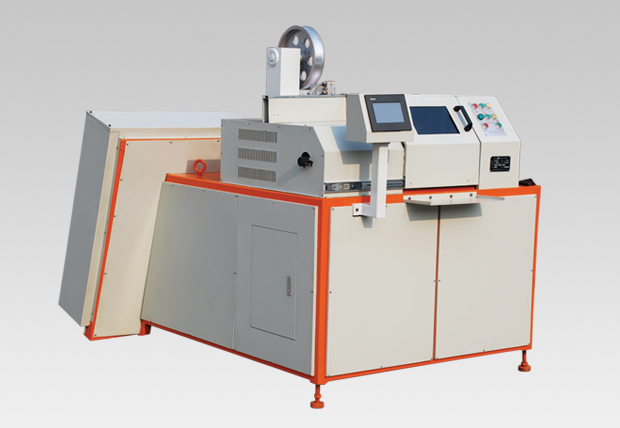
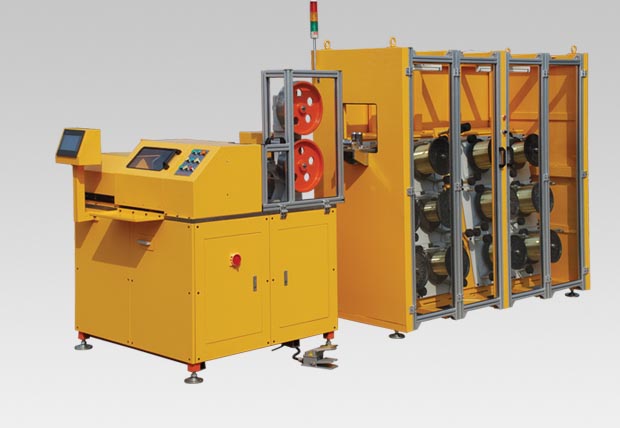
While braiding machines weave wires in an over-under pattern, a wire stranding machine (also known as a wire spiraling machine) serves a different structural purpose. It wraps high-tensile steel wires in a continuous, parallel spiral around the rubber hose. This construction is typically used for ultra-high-pressure hydraulic hoses where a standard braid might not provide sufficient strength.
Instead of the "Maypole" dance used in braiding, a stranding/spiraling machine uses large rotating discs or cages.
Parallel Alignment: Multiple wires are pulled from bobbins and laid side-by-side in a flat band.
Helical Application: This band of wires is wrapped around the rubber inner tube at a specific angle.
Layering (The "Ply"): To ensure stability, these machines usually apply wires in even pairs of layers (e.g., 4-wire spiral or 6-wire spiral). Each layer is wrapped in the opposite direction to the one beneath it (clockwise then counter-clockwise) to balance the torque and prevent the hose from twisting.
Standard braided hoses can sometimes fail under "impulse" conditions—where pressure spikes rapidly and repeatedly. Because the wires in a stranded/spiral hose don't cross over one another, there are no "pinch points." This allows the hose to handle:
Extreme Pressures: Often exceeding 400-700 bar (6,000-10,000 PSI).
Heavy Duty Cycles: Found in large construction equipment like excavators, mining drills, and heavy-duty hydraulic presses.
The Rotating Cage: A heavy steel frame that holds dozens of large wire bobbins (sometimes up to 100+ wires per layer).
Tensioning System: Crucial for stranding, as every single wire in the "band" must have identical tension to prevent gaps or overlaps.
Cooling/Lubrication: High-speed spiraling generates significant heat and friction, often requiring a dedicated lubrication system for the wires as they hit the rubber.
|
|
|||||
| Wire braiding machine Wire stranding machine Wire winding machine Hose Wrap Unwrap System Fiber braiding machine Cable braiding machine |