
 |
 |
 |
 |
 |


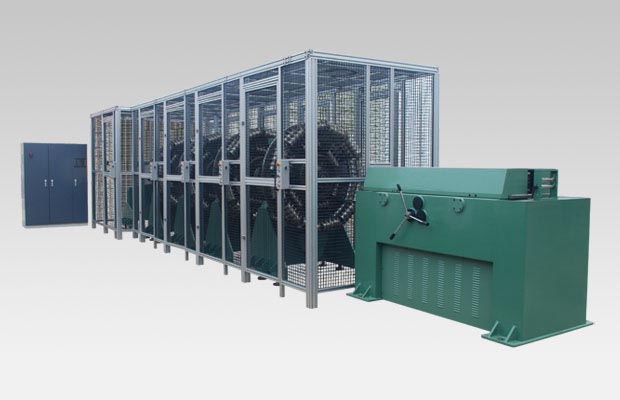
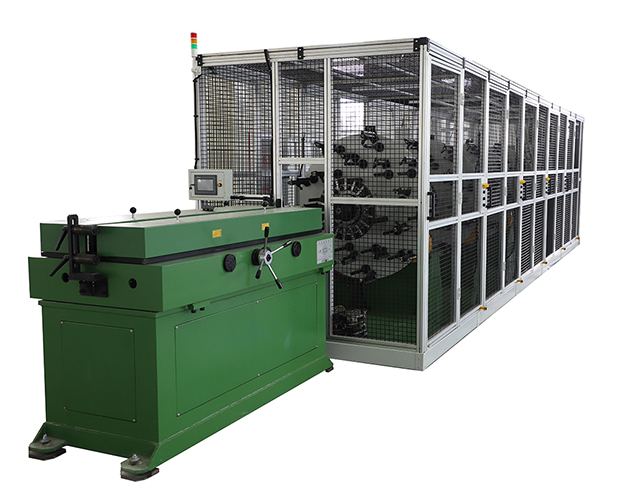
A wire winding machine (also known as a wire spiral machine) wraps the reinforcement wires in parallel, non-interlocking layers.This distinction is critical for high-pressure applications where a standard braid might fail due to the friction of the wires rubbing against each other.
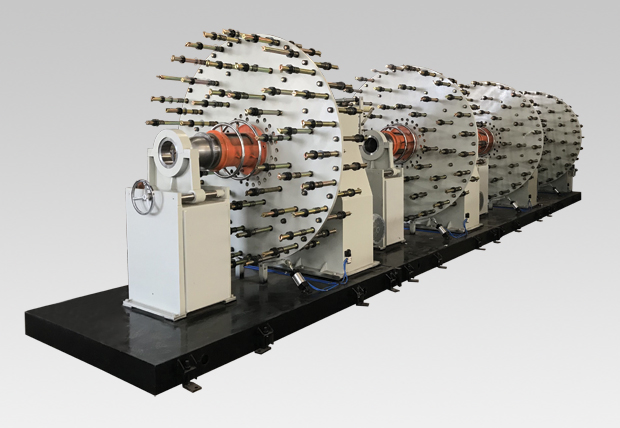
The machine applies high-tensile steel wire around a rubber inner tube (the "carcass") by rotating large "winding discs" or "bobbins" around the hose as it moves linearly.
Parallel Alignment: Unlike braiding, where wires cross, winding lays the wires side-by-side in a flat, helical ribbon.
Layering: High-pressure hoses usually require an even number of layers (e.g., 4 or 6 layers). The machine winds one layer clockwise and the next counter-clockwise. This "neutralizes" the torque, ensuring the hose doesn't twist or kink when pressurized.
Mandrel Support: Most spiral hoses are built on a rigid steel or flexible plastic mandrel to ensure the inner diameter stays perfectly round under the immense tension of the winding process.
| Feature | Wire Braiding | Wire Winding (Spiral) |
| Pressure Rating | High (e.g., 2-wire braid) | Ultra-High (e.g., 4-6 wire spiral) |
| Flexibility | More flexible; easier to bend | Stiffer; larger bend radius |
| Impulse Life | Lower (wires rub/saw at crossings) | Much Higher (no crossing points) |
| Common Use | General hydraulics | Mining, heavy construction, oil & gas |
|
|
|
||||||
| Wire braiding machine Wire stranding machine Wire winding machine Hose Wrap Unwrap System Fiber braiding machine Cable braiding machine |